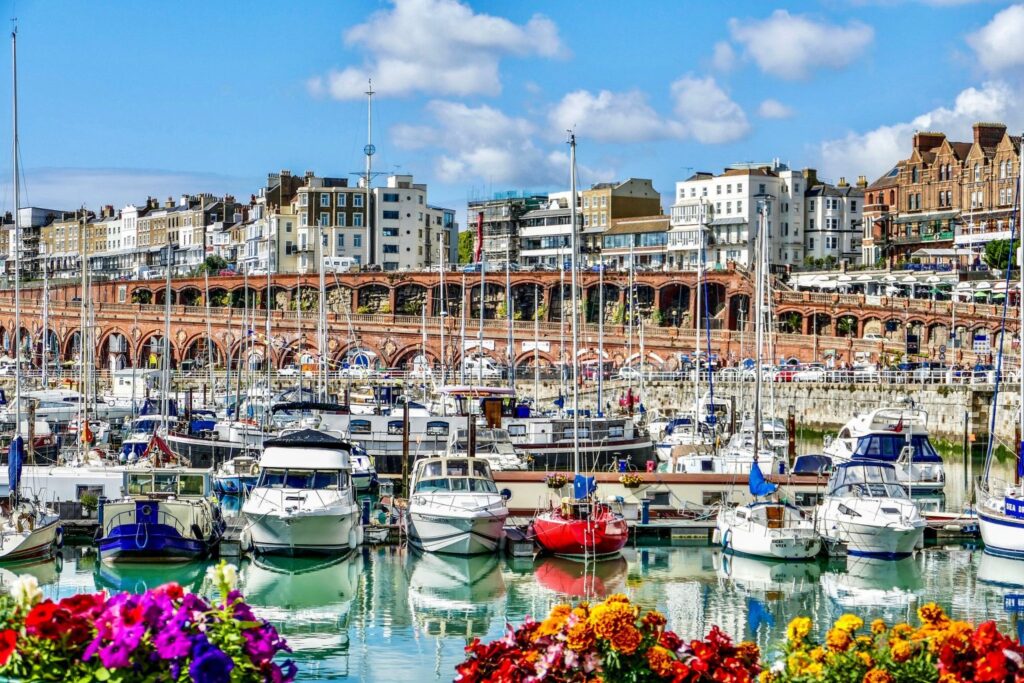
Ramsgate & the Cinque Ports
More than 500 years of maritime history
Did you know that Ramsgate has been part of one of England’s oldest maritime institutions for more than five centuries? In 1483, during the reign of Richard III, Ramsgate formally became a Limb of the Cinque Port of Sandwich, joining a remarkable confederation whose roots stretch back to medieval England.
What were the Cinque Ports?
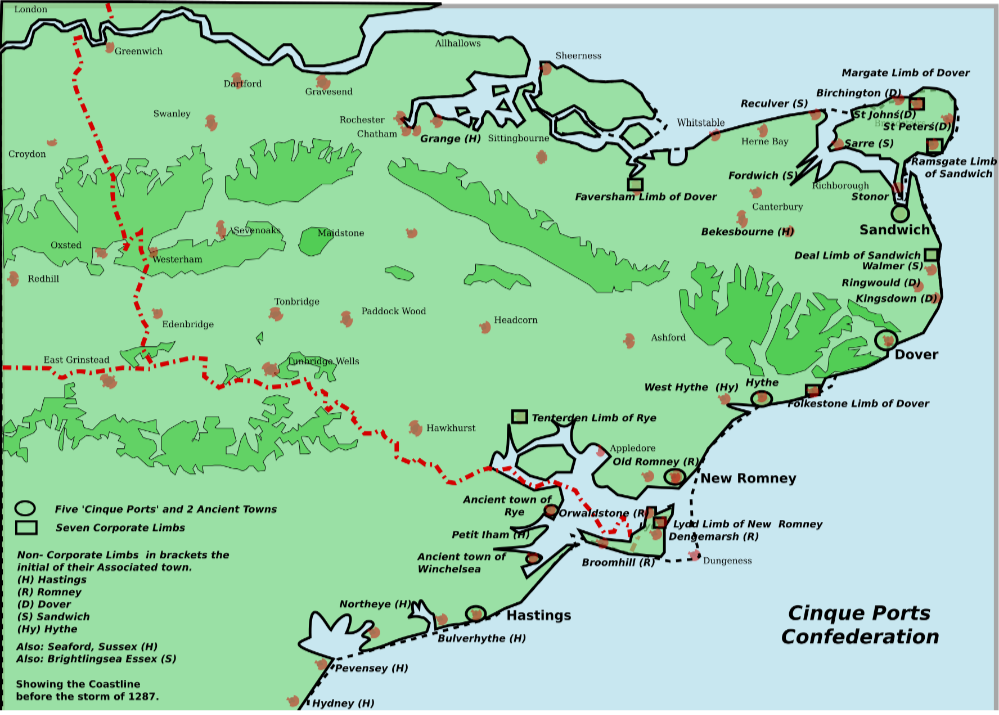
Long before England had a permanent Royal Navy, the Crown relied on coastal communities to provide ships and men when they were needed for defence and royal service. The original five Head Ports were Hastings, New Romney, Hythe, Dover and Sandwich. Rye and Winchelsea later joined them with equal standing as the two ‘Antient’ Towns. The spelling “Antient” is the historic form still used by the Cinque Ports Confederation, not an ‘ancient’ typo!
In return for providing ships, crews and maritime service, the ports received valuable rights and privileges. These included freedoms from certain tolls and customs and a degree of self-government. The Barons of the Cinque Ports also acquired an extraordinary ceremonial privilege: at coronations they traditionally bore a canopy over the monarch.
Ship service was a considerable burden. From the 11th to the 16th century the five Head Ports were required collectively to provide a fleet for the Crown, traditionally for 15 days each year. By the 13th century the quota stood at 57 ships. Each vessel was crewed by 21 men and a boy. To help meet this obligation, the Head Ports drew on neighbouring coastal communities known as Limbs or Members.
Ramsgate: a Limb of Sandwich
Ramsgate’s place in this network was through Sandwich. Historical evidence suggests that Ramsgate was associated with Sandwich’s Cinque Ports liberty before its formal recognition: Historic England notes a reference by 1354, while 1483 is widely cited as the year Ramsgate officially became a Limb of Sandwich.
For a small fishing settlement, that connection placed Ramsgate within a much larger maritime world. The Limbs helped their Head Ports provide ships, equipment and manpower, while sharing in the trading, legal and civic life that grew up around the Confederation.
The Cinque Ports were not simply picturesque harbour towns. For centuries they were central to the defence of the Channel. Their ships transported troops, guarded the coast and took part in royal campaigns. As England developed a permanent navy and larger purpose-built warships during the Tudor period, their military importance gradually declined, but the Confederation survived.
A glimpse of the world Ramsgate joined
The scale of the medieval and Tudor maritime landscape can be difficult to imagine today. Rye, one of the two Antient Towns, once stood beside a broad tidal estuary. Rye Castle Museum records that in Tudor times more than 300 vessels could shelter in the Wainway at its peak. Rye and Winchelsea had earlier maintained royal dockyards, while Cinque Ports ships carried soldiers, goods and messages across the Channel.
The coastline itself was constantly changing. Storms, erosion and silting transformed several of the great medieval ports. Old Winchelsea was lost to the sea; Rye and New Romney became increasingly separated from it and Sandwich’s harbour gradually silted. Ramsgate, by contrast, would grow in maritime importance.
| DID YOU KNOW? Cinque Ports is pronounced “Sink Ports”. The name comes from medieval Anglo-Norman French, where it appeared as cink porz, meaning “five ports”. The centuries-old English pronunciation survived even though modern French cinq is pronounced differently. |
From Cinque Port Limb to Royal Harbour
Ramsgate’s maritime story did not end with the decline of the Cinque Ports fleet. During the Tudor period a small pier or breakwater was built here and later extended. By the 17th century Ramsgate’s trade was growing, while the silting of Sandwich increased the importance of the coast around Ramsgate.
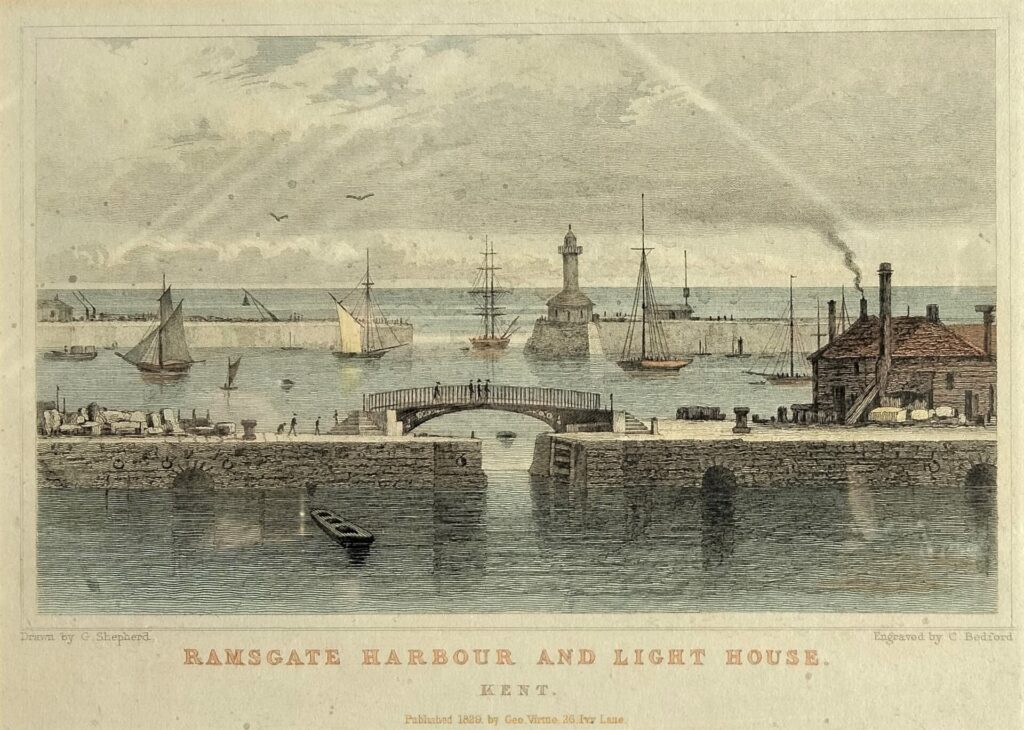
The great turning point came in the 18th century. After a violent storm in December 1748 drove ships from the Downs to seek shelter, Ramsgate was chosen for the construction of a new harbour of refuge. Work began in 1749 and the extraordinary harbour that developed over the following century became one of the defining features of the town.
In 1821 King George IV granted Ramsgate the title Royal Harbour after the welcome he received here on his return from Hanover. Its motto, Perfugium Miseris – “A Refuge for the Unfortunate” – reflects the harbour’s enduring role as a place of safety and shelter.
A maritime story that is still being recognised
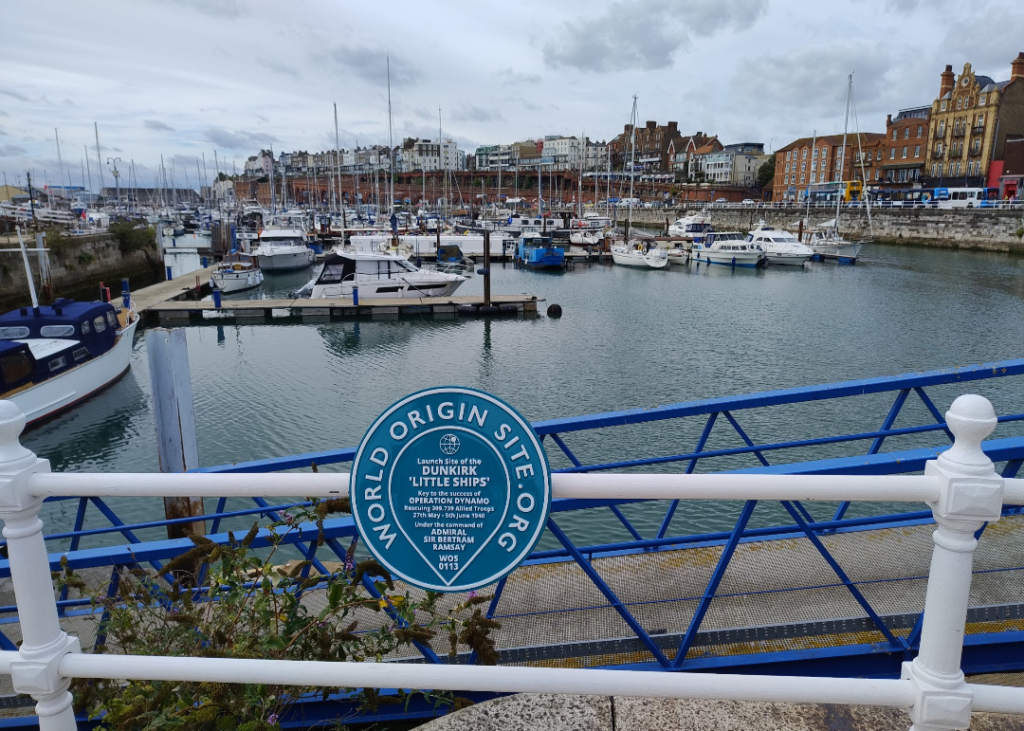
That tradition continued into the 20th century. In 1940 Ramsgate became a crucial assembly and return point during Operation Dynamo, when the famous Little Ships and other vessels crossed the Channel as part of the evacuation of Allied troops from Dunkirk.
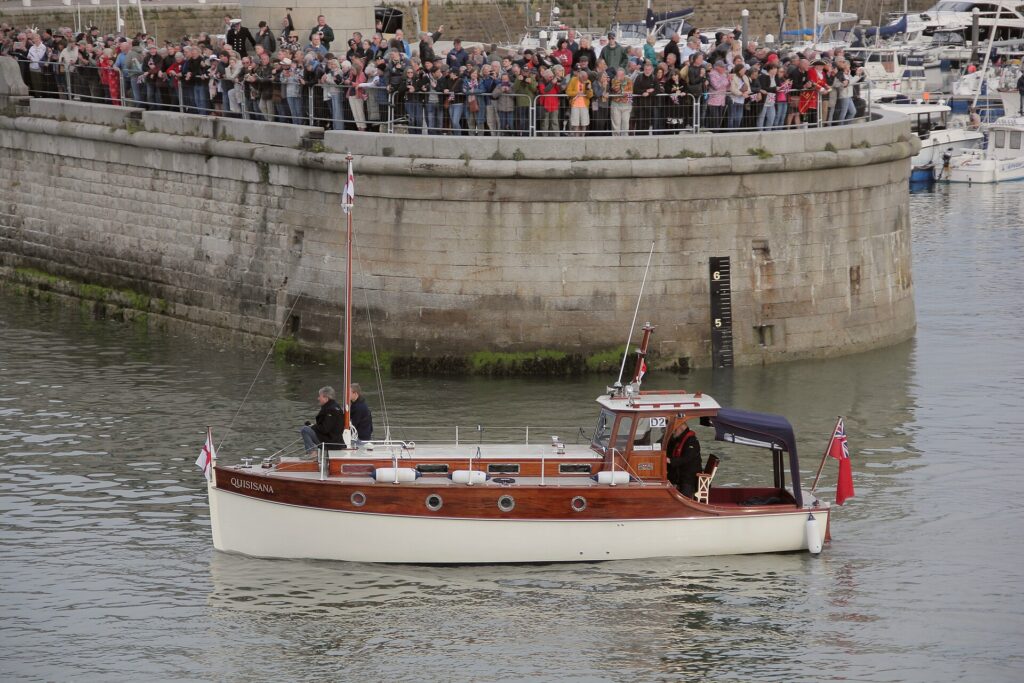
Ramsgate’s historic significance continues to be recognised today. In July 2024 the Royal Harbour joined the national Heritage Harbours initiative, celebrating both its exceptional historic environment and its continuing life as a working harbour.
In 2025, during the 85th anniversary of Operation Dynamo, Ramsgate was accredited as a World Origin Site in recognition of the harbour as the place where the Dunkirk Little Ships were assembled before their historic crossing. The World Origin Site plaque now adds another chapter to more than five centuries of nationally important maritime history.
Discover the story around the harbour
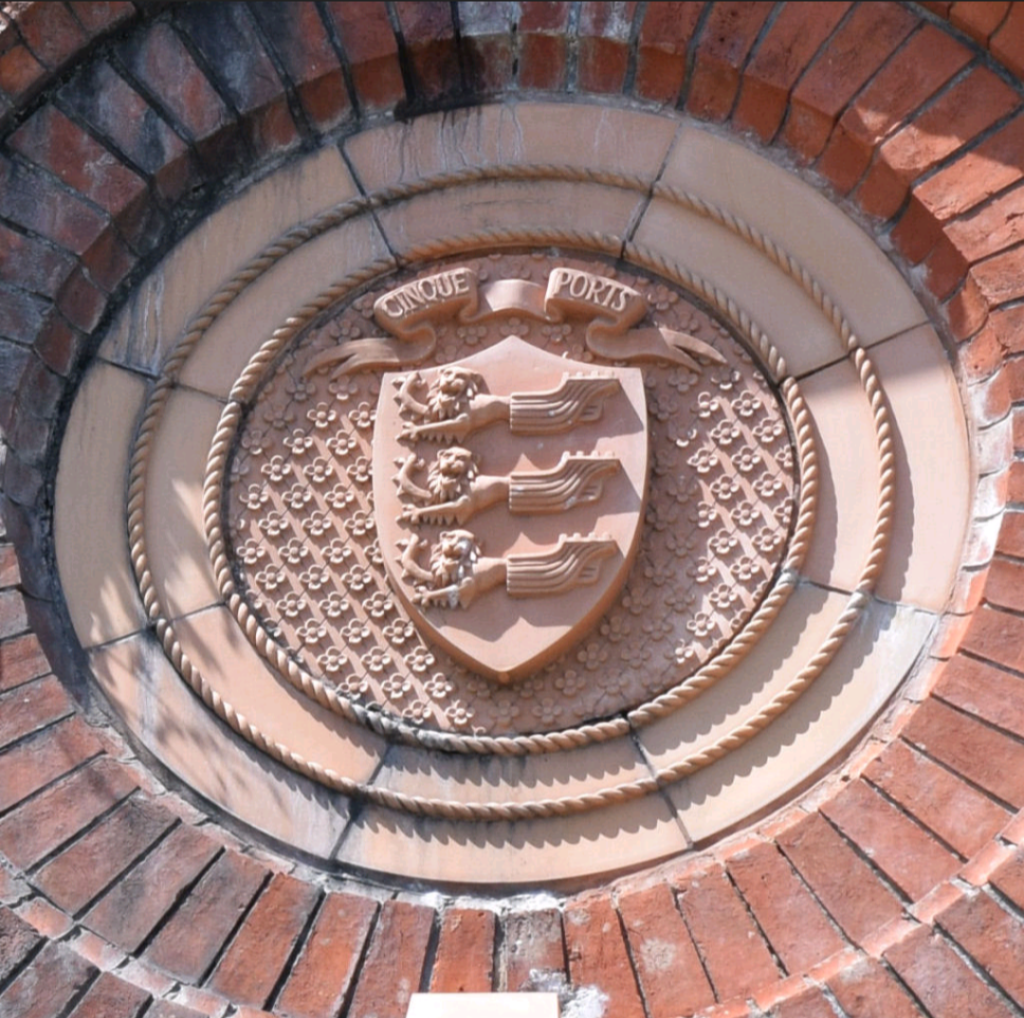
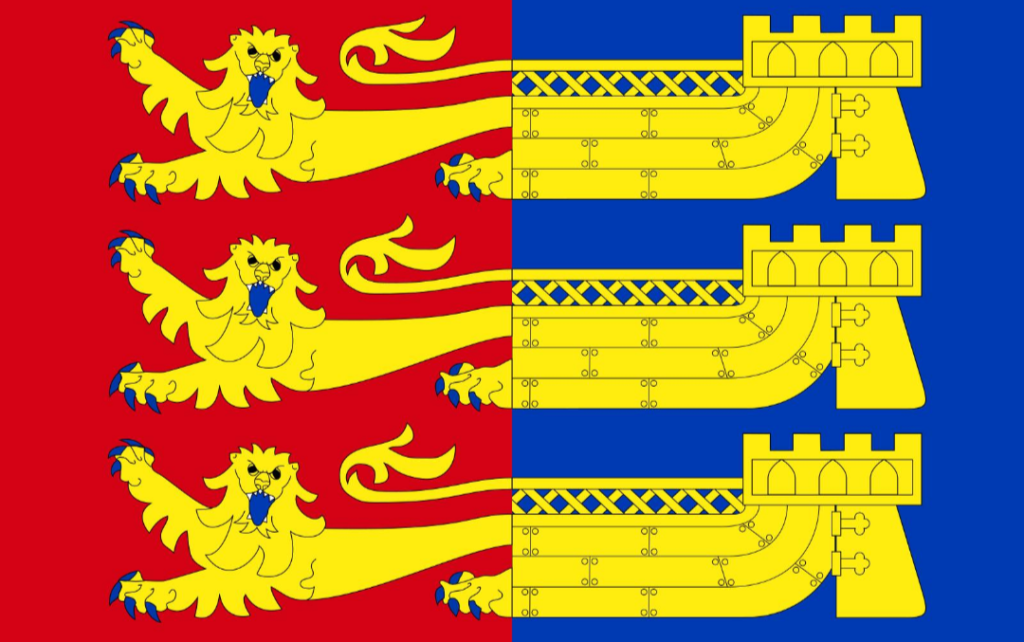
You can still spot Ramsgate’s Cinque Ports connection around the Royal Harbour today, including the distinctive three lion-and-ship emblem of the Confederation.
And there is much more to discover. Fourteen heritage information boards installed around the harbour tell the stories of the people, places, buildings and events that have shaped this remarkable place. For more information see the Harbour Heritage trail.
From a Limb of Sandwich in 1483 to Royal Harbour, Heritage Harbour and World Origin Site, Ramsgate’s relationship with the sea has endured for centuries and it continues to shape the town today.