
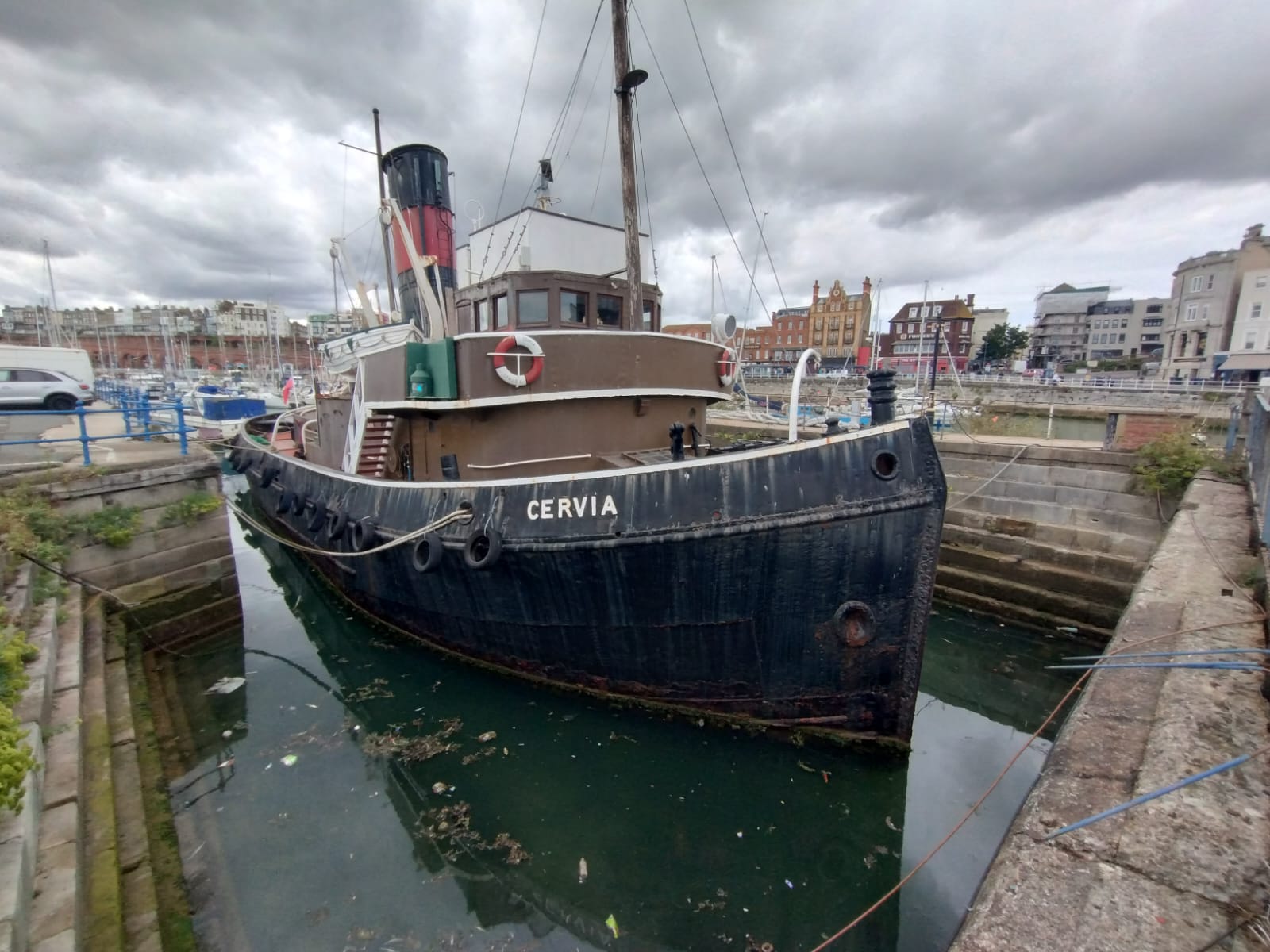
ST Cervia
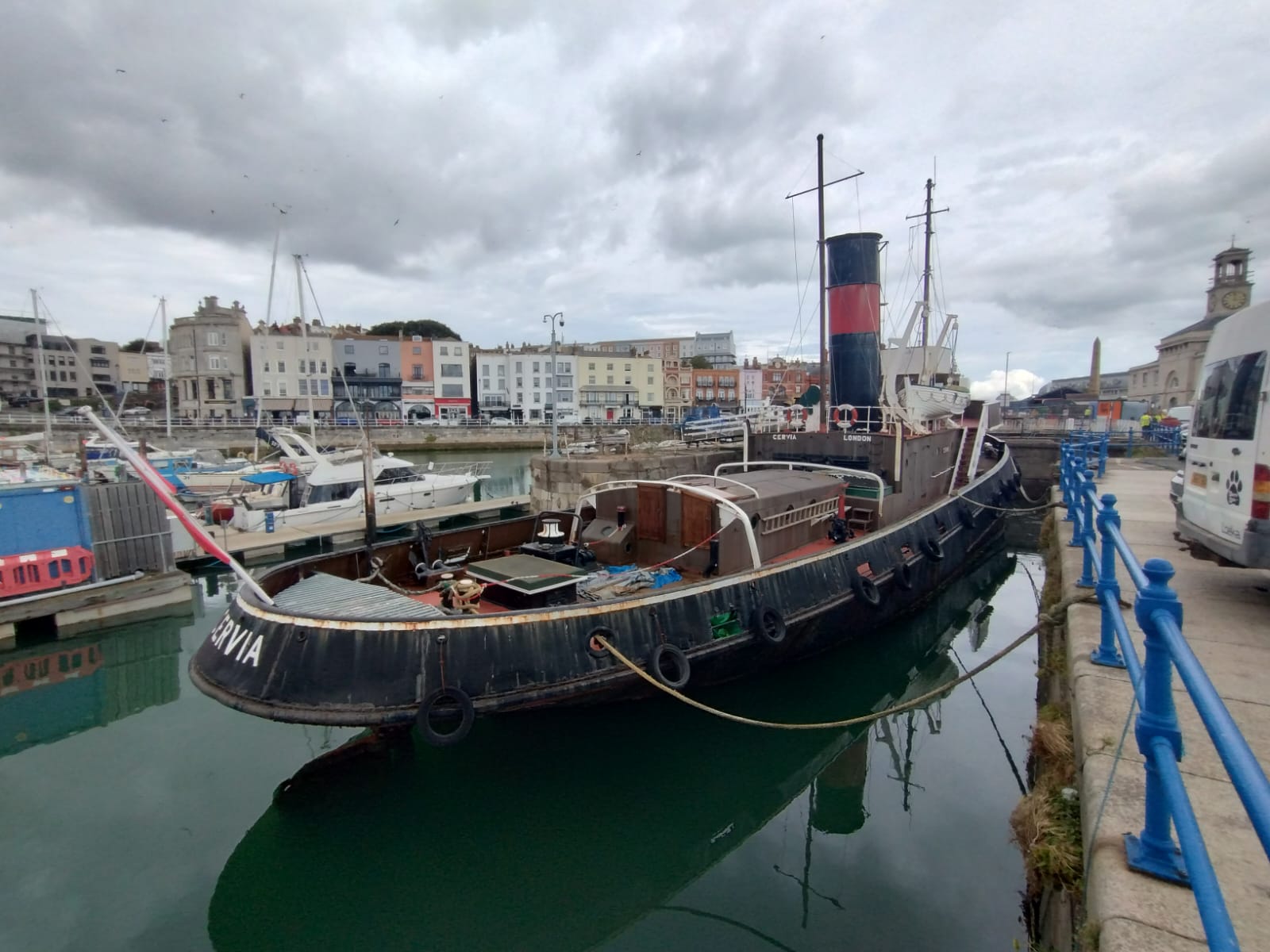
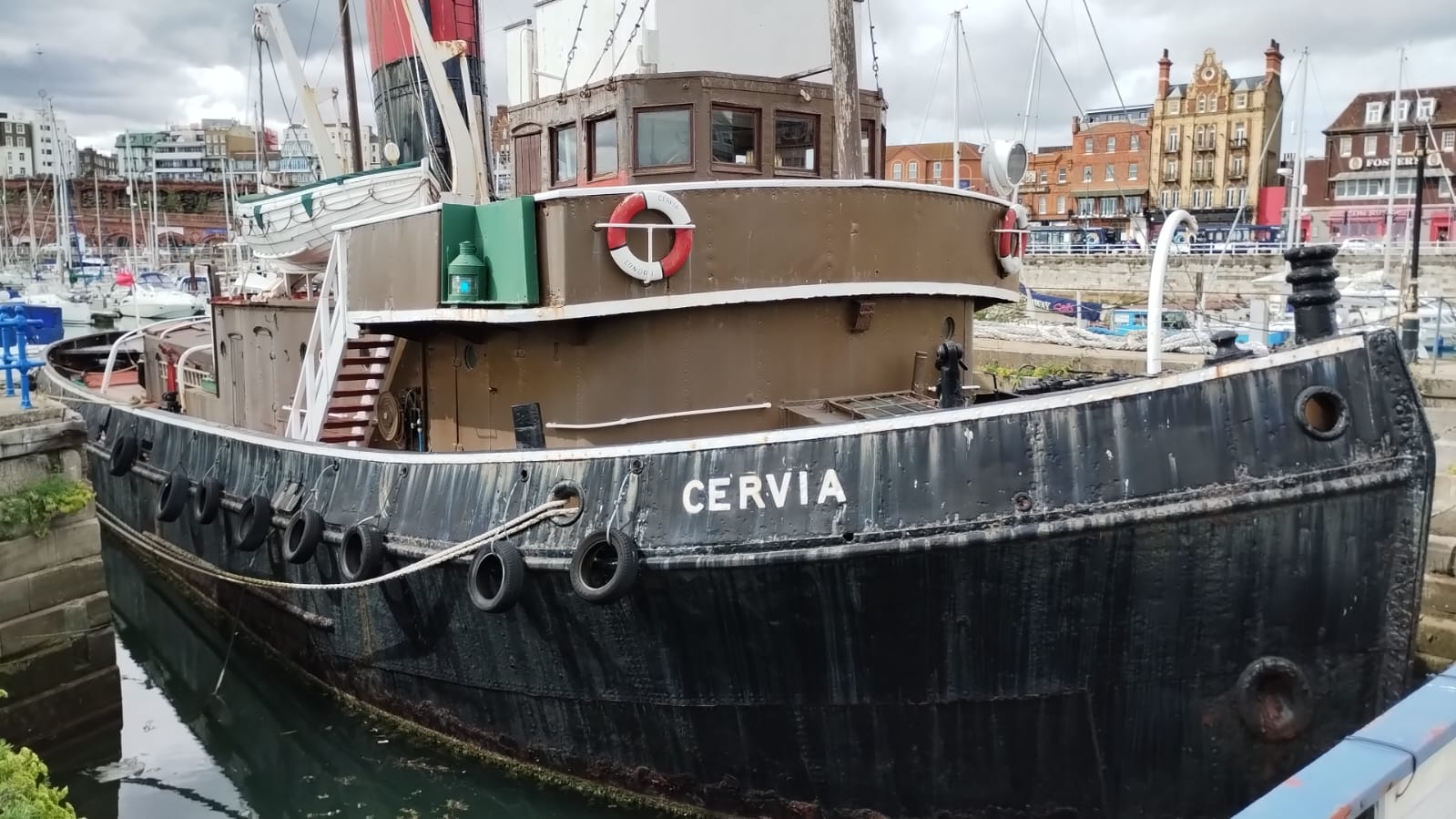
ST (Steam Tug) Cervia is a historic, 350-ton deep-sea ocean-going steam tugboat. It is highly notable as the last sea-going commercial steam tug to survive in UK waters and is believed to be the final surviving “Empire Class” vessel in the United Kingdom.
History & Wartime Origins
Wartime Design: Built by Alexander Hall & Co. in Aberdeen, Scotland, she was launched on January 21, 1946. She was originally commissioned by the Ministry of War Transport for Operation Overlord (the D-Day invasion) under the name Empire Raymond.
Because she was built using a rapid-production emergency war design, she was completed with an armoured wheelhouse and gun emplacements. However, the war ended just before she could be deployed. In late 1946, she was sold to the commercial towing company William Watkins Ltd for £36,000 and renamed Cervia, after an Italian holiday destination where the owners held a villa.
Post-War Career & Retirement
For decades, she worked across the UK and mainland Europe. She specialized in deep-sea salvage and famously helped rescue numerous ships stranded on the treacherous Goodwin Sands. In the 1970s, she adjusted to modern demands by towing North Sea oil rigs. Her final commercial contract before retirement in 1983 was acting as a port tug assisting cross-channel ferries in Ramsgate.
Preservation Status
The Cervia is designated as a part of the prestigious National Historic Fleet (a list of the 200 most historically significant vessels in the UK). She has spent decades preserved as a static floating museum ship based out of Ramsgate Harbour, Kent, where she remains under the care of preservation volunteers working to maintain her historic structure.
MAP
CONTACT
🌐 Main Website : Click here
🌐 Kids Website : Click here